
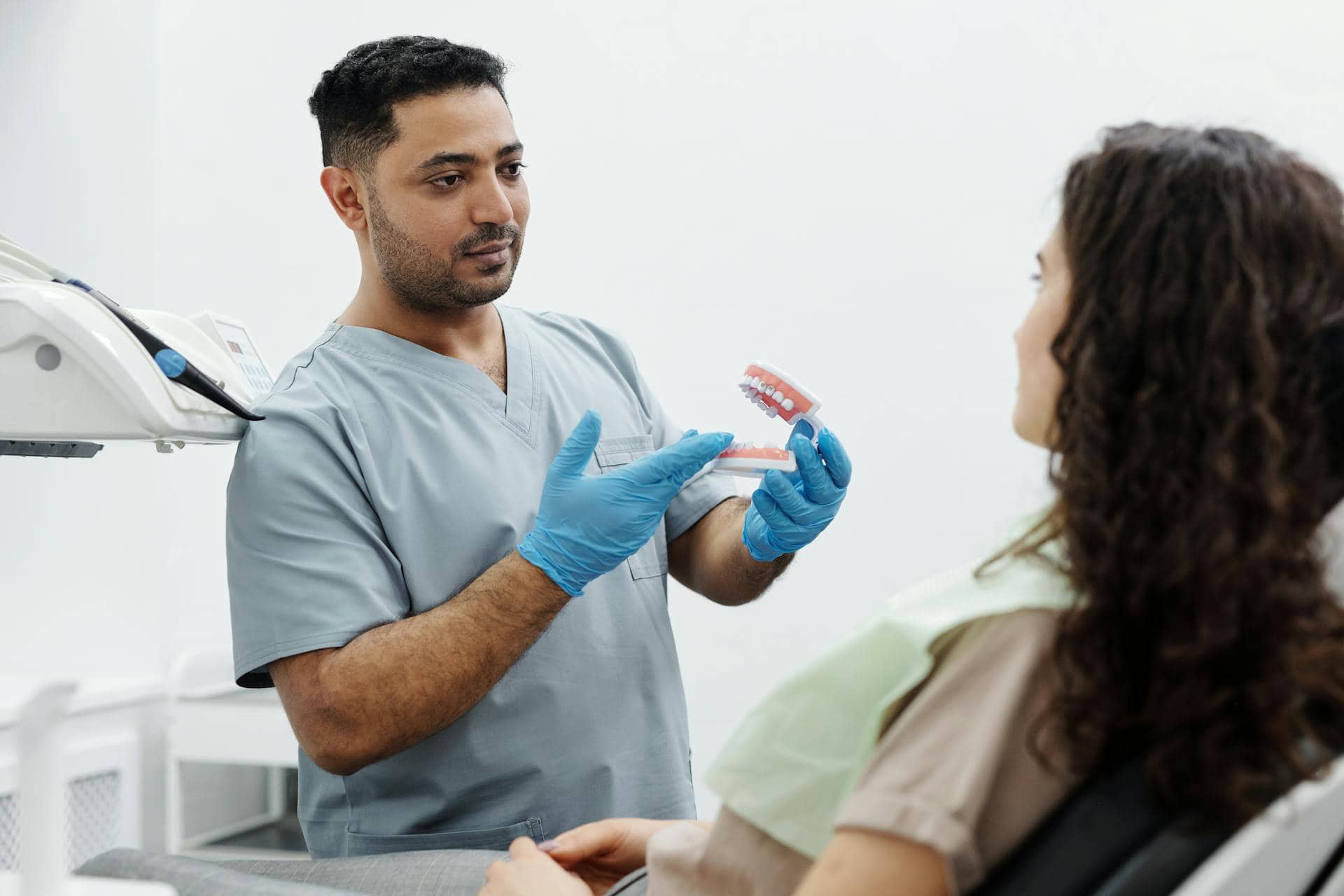
If you’re comparing Invisalign vs braces, you’re not alone. More and more adults are weighing these two treatments every year, trying to figure out which one actually makes sense for their life right now.
You want a straighter smile, but you also have a career, social life, and practical concerns to think about. Neither option is universally better. The right choice depends on your specific dental needs, lifestyle, and personal preferences. Let’s break down everything you need to know so you can make a confident decision about your smile.
, you’re not alone. More and more adults are weighing these two treatments every year, trying to figure out which one actually makes sense for their life right now.
You want a straighter smile, but you also have a career, social life, and practical concerns to think about. Neither option is universally better. The right choice depends on your specific dental needs, lifestyle, and personal preferences. Let’s break down everything you need to know so you can make a confident decision about your smile.
What Are Invisalign and Braces? Understanding Your Two Main Options
Invisalign uses custom clear plastic aligners to gradually shift teeth into place, while braces use fixed metal or ceramic brackets connected by archwires. Both are FDA-cleared orthodontic treatments with proven track records for adult patients, and both deliver lasting results when supervised by a board-certified orthodontist. The best option depends on your case complexity, lifestyle needs, and personal preferences.
With Invisalign, you wear a series of custom-made clear plastic aligners that fit snugly over your teeth. Each set applies gentle, controlled pressure to shift your teeth incrementally toward their ideal positions. You receive a new set of aligners every one to two weeks, with each set making small adjustments that add up to significant changes over time.
Traditional braces take a different approach. A fixed system of brackets is bonded directly to your teeth, connected by a thin metal archwire. Periodic adjustments to this wire guide your teeth into proper alignment. Today’s braces are smaller, lighter, and more comfortable than the braces you might remember from decades past.
Both treatments have improved significantly in recent years. Modern aligners can address a wider range of orthodontic issues than early versions. Braces now come in ceramic versions that blend with your natural tooth color, making them far less noticeable than the metal brackets of the past. At Garcia Orthodontics, our orthodontists work with both systems daily and can help you understand which one fits your situation best.
The key difference? Invisalign aligners are removable, while braces stay in place throughout your treatment. This fundamental distinction affects everything from how you eat to how you clean your teeth, and it’s often the deciding factor for many adults.
Invisalign uses custom clear plastic aligners to gradually shift teeth into place, while braces use fixed metal or ceramic brackets connected by archwires. Both are FDA-cleared orthodontic treatments with proven track records for adult patients, and both deliver lasting results when supervised by a board-certified orthodontist. The best option depends on your case complexity, lifestyle needs, and personal preferences.
With Invisalign, you wear a series of custom-made clear plastic aligners that fit snugly over your teeth. Each set applies gentle, controlled pressure to shift your teeth incrementally toward their ideal positions. You receive a new set of aligners every one to two weeks, with each set making small adjustments that add up to significant changes over time.
Traditional braces take a different approach. A fixed system of brackets is bonded directly to your teeth, connected by a thin metal archwire. Periodic adjustments to this wire guide your teeth into proper alignment. Today’s braces are smaller, lighter, and more comfortable than the braces you might remember from decades past.
Both treatments have improved significantly in recent years. Modern aligners can address a wider range of orthodontic issues than early versions. Braces now come in ceramic versions that blend with your natural tooth color, making them far less noticeable than the metal brackets of the past. At Garcia Orthodontics, our orthodontists work with both systems daily and can help you understand which one fits your situation best.
The key difference? Invisalign aligners are removable, while braces stay in place throughout your treatment. This fundamental distinction affects everything from how you eat to how you clean your teeth, and it’s often the deciding factor for many adults.
How Each Treatment Works: The Process from Start to Finish
Understanding what to expect from each treatment helps you picture what your experience will actually look like from day one through your final visit.
Understanding what to expect from each treatment helps you picture what your experience will actually look like from day one through your final visit.
What Is the Invisalign Process?
Your Invisalign treatment begins with a digital scan of your teeth using the iTero scanner. This creates a precise 3D model of your mouth, with no messy impressions required. From there, your board-certified orthodontist maps out your entire treatment plan, showing you a virtual preview of how your teeth will move at each stage.
Once your custom aligners are fabricated, you’ll wear each set for one to two weeks before switching to the next. Most patients need anywhere from 20 to 30 sets of aligners, though this varies based on your specific case.
Here’s what your Invisalign routine looks like:
Your Invisalign treatment begins with a digital scan of your teeth using the iTero scanner. This creates a precise 3D model of your mouth, with no messy impressions required. From there, your board-certified orthodontist maps out your entire treatment plan, showing you a virtual preview of how your teeth will move at each stage.
Once your custom aligners are fabricated, you’ll wear each set for one to two weeks before switching to the next. Most patients need anywhere from 20 to 30 sets of aligners, though this varies based on your specific case.
Here’s what your Invisalign routine looks like:
- Wear aligners 20 to 22 hours dailyWear aligners 20 to 22 hours daily
- Remove only for eating, drinking anything besides water, and brushingRemove only for eating, drinking anything besides water, and brushing
- Clean aligners daily with a soft brush and clear soapClean aligners daily with a soft brush and clear soap
- Switch to new aligners as directedSwitch to new aligners as directed
- Visit your orthodontist every 6 to 10 weeks for progress checksVisit your orthodontist every 6 to 10 weeks for progress checks
Compliance is critical with Invisalign. The aligners only work when you’re wearing them. If you frequently forget to put them back in after meals, your treatment will take longer.
Compliance is critical with Invisalign. The aligners only work when you’re wearing them. If you frequently forget to put them back in after meals, your treatment will take longer.
What Is the Braces Process?
Braces treatment starts with bonding brackets to each tooth using a special dental adhesive. The archwire threads through these brackets, and small elastic bands hold everything in place. This entire process typically takes one to two hours.
Adjustment visits occur every four to eight weeks. During these visits, the archwire gets tightened or changed, pressure on specific teeth is adjusted, and your progress is monitored closely. Because braces are fixed, they work continuously. There’s no way to forget to wear them. As a Diamond Plus Invisalign Provider, Garcia Orthodontics has deep experience with both braces and aligner systems, so our team of orthodontists can guide you through either process with confidence.
Braces treatment starts with bonding brackets to each tooth using a special dental adhesive. The archwire threads through these brackets, and small elastic bands hold everything in place. This entire process typically takes one to two hours.
Adjustment visits occur every four to eight weeks. During these visits, the archwire gets tightened or changed, pressure on specific teeth is adjusted, and your progress is monitored closely. Because braces are fixed, they work continuously. There’s no way to forget to wear them. As a Diamond Plus Invisalign Provider, Garcia Orthodontics has deep experience with both braces and aligner systems, so our team of orthodontists can guide you through either process with confidence.
How Long Does Treatment Take?
For most adults, both Invisalign and braces take 12 to 24 months to complete. Complex cases require longer treatment regardless of which option you choose. According to the American Association of Orthodontists, adult orthodontic treatment has grown steadily over the past decade, with one in three orthodontic patients now over the age of 18. Your orthodontist can give you a more accurate timeline after evaluating your specific needs.
For most adults, both Invisalign and braces take 12 to 24 months to complete. Complex cases require longer treatment regardless of which option you choose. According to the American Association of Orthodontists, adult orthodontic treatment has grown steadily over the past decade, with one in three orthodontic patients now over the age of 18. Your orthodontist can give you a more accurate timeline after evaluating your specific needs.
Key Benefits of Invisalign and Braces for Adult Patients
Both treatments offer distinct advantages. Understanding these benefits helps you weigh what matters most for your lifestyle.
Both treatments offer distinct advantages. Understanding these benefits helps you weigh what matters most for your lifestyle.
What Are the Benefits of Invisalign?
- Nearly invisible appearance. Clear aligners are difficult to notice in photos, video calls, and face-to-face conversations.Nearly invisible appearance. Clear aligners are difficult to notice in photos, video calls, and face-to-face conversations.
- Removable for eating, so you can enjoy all your favorite foods without restrictions.Removable for eating, so you can enjoy all your favorite foods without restrictions.
- Easier oral hygiene, since you brush and floss normally by simply removing your aligners.Easier oral hygiene, since you brush and floss normally by simply removing your aligners.
- Fewer practice visits. Progress checks are typically less frequent than braces adjustments.Fewer practice visits. Progress checks are typically less frequent than braces adjustments.
- Smooth plastic causes less irritation to cheeks and gums compared to brackets and wires.Smooth plastic causes less irritation to cheeks and gums compared to brackets and wires.
- Digital treatment preview lets you see your projected results before you even start.Digital treatment preview lets you see your projected results before you even start.
- Discreet enough for professional settings. Most coworkers and clients won’t notice you’re in treatment at all.Discreet enough for professional settings. Most coworkers and clients won’t notice you’re in treatment at all.
What Are the Benefits of Braces?
- Handles complex cases that aligners sometimes can’t, including severe crowding, significant bite issues, and rotated teeth.Handles complex cases that aligners sometimes can’t, including severe crowding, significant bite issues, and rotated teeth.
- No compliance concerns. They work around the clock without any action required from you.No compliance concerns. They work around the clock without any action required from you.
- Your orthodontist has precise control over each tooth’s position, which matters for difficult movements.Your orthodontist has precise control over each tooth’s position, which matters for difficult movements.
- Fixed brackets can’t be misplaced or forgotten at a restaurant.Fixed brackets can’t be misplaced or forgotten at a restaurant.
- Proven results for decades across millions of patients of all ages.Proven results for decades across millions of patients of all ages.
- For severe cases, braces often achieve results more efficiently than aligners, especially when teeth need significant rotation or vertical repositioning.For severe cases, braces often achieve results more efficiently than aligners, especially when teeth need significant rotation or vertical repositioning.
What Benefits Do Both Treatments Share?
Regardless of which treatment you choose, straightening your teeth as an adult offers real advantages that go beyond appearance. Properly aligned teeth are easier to clean, reducing your risk of cavities and gum disease over time. Correcting bite issues can relieve jaw tension and reduce abnormal wear on your tooth enamel. Many adults also notice improvements in chewing efficiency and even speech clarity once their teeth are properly aligned.
And let’s be honest about the emotional benefits. When you love your smile, you’re more open, more honest, and more you. A smile you love can boost your confidence in professional presentations, social situations, and everyday interactions. That kind of confidence shows up in ways you might not expect, from how you carry yourself in meetings to how freely you laugh with friends.
Regardless of which treatment you choose, straightening your teeth as an adult offers real advantages that go beyond appearance. Properly aligned teeth are easier to clean, reducing your risk of cavities and gum disease over time. Correcting bite issues can relieve jaw tension and reduce abnormal wear on your tooth enamel. Many adults also notice improvements in chewing efficiency and even speech clarity once their teeth are properly aligned.
And let’s be honest about the emotional benefits. When you love your smile, you’re more open, more honest, and more you. A smile you love can boost your confidence in professional presentations, social situations, and everyday interactions. That kind of confidence shows up in ways you might not expect, from how you carry yourself in meetings to how freely you laugh with friends.
Invisalign vs Braces: Side-by-Side Comparison for Adults
Sometimes the clearest way to evaluate your options is a direct comparison. At Garcia Orthodontics, our orthodontists walk patients through these differences every day. Here’s how Invisalign and braces stack up across the factors that matter most to adult patients.
Sometimes the clearest way to evaluate your options is a direct comparison. At Garcia Orthodontics, our orthodontists walk patients through these differences every day. Here’s how Invisalign and braces stack up across the factors that matter most to adult patients.
| FactorFactor | InvisalignInvisalign | BracesBraces |
|---|---|---|
| AppearanceAppearance | Nearly invisible clear alignersNearly invisible clear aligners | Metal brackets visible; ceramic blends betterMetal brackets visible; ceramic blends better |
| ComfortComfort | Smooth plastic; minimal irritationSmooth plastic; minimal irritation | Initial adjustment period; wax helps with irritationInitial adjustment period; wax helps with irritation |
| RemovabilityRemovability | Fully removableFully removable | Fixed throughout treatmentFixed throughout treatment |
| Food RestrictionsFood Restrictions | None, remove aligners to eat anythingNone, remove aligners to eat anything | Avoid hard, sticky, and chewy foodsAvoid hard, sticky, and chewy foods |
| Oral HygieneOral Hygiene | Easy, brush and floss normallyEasy, brush and floss normally | Requires careful cleaning around brackets and wiresRequires careful cleaning around brackets and wires |
| Practice VisitsPractice Visits | Every 6-10 weeksEvery 6-10 weeks | Every 4-8 weeksEvery 4-8 weeks |
| Case ComplexityCase Complexity | Best for mild to moderate issuesBest for mild to moderate issues | Handles all complexity levelsHandles all complexity levels |
| Compliance RequiredCompliance Required | High, must wear 20-22 hours dailyHigh, must wear 20-22 hours daily | None, braces work automaticallyNone, braces work automatically |
| Treatment TimeTreatment Time | 12-24 months average12-24 months average | 12-24 months average12-24 months average |
In short, Invisalign offers superior aesthetics and convenience, while braces provide more control for complex cases. Both deliver comparable results for most adult patients.
In short, Invisalign offers superior aesthetics and convenience, while braces provide more control for complex cases. Both deliver comparable results for most adult patients.
How Noticeable Is Each Option?
For many adults, appearance is the top concern. Invisalign aligners are made from clear, medical-grade plastic that’s genuinely difficult to spot. Most people won’t notice you’re wearing them unless you point them out. Traditional metal braces are more visible, though ceramic brackets offer a subtler look with tooth-colored material that blends more naturally.
For many adults, appearance is the top concern. Invisalign aligners are made from clear, medical-grade plastic that’s genuinely difficult to spot. Most people won’t notice you’re wearing them unless you point them out. Traditional metal braces are more visible, though ceramic brackets offer a subtler look with tooth-colored material that blends more naturally.
What Does Each Treatment Feel Like?
Both treatments cause some discomfort as your teeth move. That’s simply how orthodontics works. Invisalign typically causes a feeling of pressure when you switch to new aligners, which usually subsides within a day or two. Braces can cause more initial discomfort as your mouth adjusts to the brackets. Orthodontic wax helps protect soft tissue during this adjustment period.
Both treatments cause some discomfort as your teeth move. That’s simply how orthodontics works. Invisalign typically causes a feeling of pressure when you switch to new aligners, which usually subsides within a day or two. Braces can cause more initial discomfort as your mouth adjusts to the brackets. Orthodontic wax helps protect soft tissue during this adjustment period.
How Will Treatment Affect Your Daily Life?
Both treatments affect your daily routine differently, especially around meals and oral hygiene. With Invisalign, you’ll remove your aligners before every meal and snack. You can eat whatever you want, but you’ll need to brush before putting aligners back in. Braces require you to avoid certain foods entirely. Hard foods like nuts, popcorn kernels, and ice can damage brackets. Sticky foods like caramel and gum can pull brackets loose.
Both treatments affect your daily routine differently, especially around meals and oral hygiene. With Invisalign, you’ll remove your aligners before every meal and snack. You can eat whatever you want, but you’ll need to brush before putting aligners back in. Braces require you to avoid certain foods entirely. Hard foods like nuts, popcorn kernels, and ice can damage brackets. Sticky foods like caramel and gum can pull brackets loose.
Investment and Value: Invisalign vs Braces for Adults
Invisalign and braces typically fall within a similar price range for comparable cases. The specific investment depends on several factors, and for most adults, the total is roughly equivalent between the two treatments when the complexity of the case is similar.
Here’s what influences your total investment:
Invisalign and braces typically fall within a similar price range for comparable cases. The specific investment depends on several factors, and for most adults, the total is roughly equivalent between the two treatments when the complexity of the case is similar.
Here’s what influences your total investment:
- Case complexity. More severe alignment issues require longer treatment and more resourcesCase complexity. More severe alignment issues require longer treatment and more resources
- Treatment duration. Extended timelines naturally increase the overall investmentTreatment duration. Extended timelines naturally increase the overall investment
- Geographic location. Prices vary by region and marketGeographic location. Prices vary by region and market
- Orthodontist experience. Board-certified specialists with advanced training and credentials may price differently than general dentists offering alignersOrthodontist experience. Board-certified specialists with advanced training and credentials may price differently than general dentists offering aligners
- Type of braces. Ceramic brackets typically run higher than metalType of braces. Ceramic brackets typically run higher than metal
Does Insurance Cover Invisalign and Braces?
Most dental insurance plans with orthodontic coverage treat Invisalign and braces equally. Your plan likely covers a portion of either treatment up to a lifetime maximum, often around $1,500 to $2,000. Garcia Orthodontics also offers flexible financing to help make treatment more accessible, including $0 down options. It’s worth asking about payment structures during your initial consult so you can plan ahead with confidence.
Most dental insurance plans with orthodontic coverage treat Invisalign and braces equally. Your plan likely covers a portion of either treatment up to a lifetime maximum, often around $1,500 to $2,000. Garcia Orthodontics also offers flexible financing to help make treatment more accessible, including $0 down options. It’s worth asking about payment structures during your initial consult so you can plan ahead with confidence.
What Is the Long-Term Value of Orthodontic Treatment?
When evaluating your investment, consider the long-term value of orthodontic treatment. Straight teeth are easier to keep clean, potentially reducing future dental expenses. Corrected bite issues can prevent jaw problems and abnormal tooth wear. The confidence that comes from loving your smile is something you carry with you every single day, in every conversation and every room you walk into.
When evaluating your investment, consider the long-term value of orthodontic treatment. Straight teeth are easier to keep clean, potentially reducing future dental expenses. Corrected bite issues can prevent jaw problems and abnormal tooth wear. The confidence that comes from loving your smile is something you carry with you every single day, in every conversation and every room you walk into.
Are You a Candidate? How to Know Which Option Is Right for You
Not everyone is an ideal candidate for every treatment. Here’s how to start thinking about which option suits you best.
Not everyone is an ideal candidate for every treatment. Here’s how to start thinking about which option suits you best.
Who Is a Good Candidate for Invisalign?
Invisalign tends to be a strong fit if you have:
Invisalign tends to be a strong fit if you have:
- Mild to moderate crowding or spacing issuesMild to moderate crowding or spacing issues
- Minor bite concerns that don’t require complex tooth movementMinor bite concerns that don’t require complex tooth movement
- Strong self-discipline to wear aligners consistentlyStrong self-discipline to wear aligners consistently
- A lifestyle that benefits from removable appliancesA lifestyle that benefits from removable appliances
- Professional or social situations where discretion mattersProfessional or social situations where discretion matters
Who Is a Good Candidate for Braces?
Braces are often recommended if you have:
Braces are often recommended if you have:
- Severe crowding requiring significant tooth movementSevere crowding requiring significant tooth movement
- Complex bite issues like deep overbites or underbitesComplex bite issues like deep overbites or underbites
- Teeth that need rotation or vertical movementTeeth that need rotation or vertical movement
- Concerns about remembering to wear removable appliancesConcerns about remembering to wear removable appliances
- Cases requiring jaw surgery as part of treatmentCases requiring jaw surgery as part of treatment
- Situations where predictable, continuous force is beneficialSituations where predictable, continuous force is beneficial
- Multiple teeth that need to move in different directions simultaneouslyMultiple teeth that need to move in different directions simultaneously
What Factors Affect Both Treatments?
Before starting any orthodontic treatment, certain conditions should be addressed:
Before starting any orthodontic treatment, certain conditions should be addressed:
- Active gum disease needs treatment firstActive gum disease needs treatment first
- Cavities should be filled before brackets are placed or aligners are madeCavities should be filled before brackets are placed or aligners are made
- Missing teeth require coordination with a restorative dentistMissing teeth require coordination with a restorative dentist
- Jaw joint issues might need evaluationJaw joint issues might need evaluation
Adult patients often have unique scheduling needs due to busy professional lives, so it’s also worth considering how frequently you can attend consults and which treatment fits more naturally into your routine.
Adult patients often have unique scheduling needs due to busy professional lives, so it’s also worth considering how frequently you can attend consults and which treatment fits more naturally into your routine.
How Can You Know for Sure?
Online quizzes and general guidelines can point you in a direction, but they can’t replace a professional evaluation. At Garcia Orthodontics, our board-certified orthodontists examine your teeth, take diagnostic images, and assess your bite to determine which treatment will give you the best results. With thousands of cases treated and over 4,000 five-star Google reviews, our team has the experience to match you with the right approach.
According to the American Association of Orthodontists, adults should seek a consult with an orthodontist rather than relying solely on mail-order aligner services or general dentists for complex cases. Orthodontic specialists complete two to three years of additional residency training beyond dental school, focused specifically on tooth movement and jaw alignment.
Online quizzes and general guidelines can point you in a direction, but they can’t replace a professional evaluation. At Garcia Orthodontics, our board-certified orthodontists examine your teeth, take diagnostic images, and assess your bite to determine which treatment will give you the best results. With thousands of cases treated and over 4,000 five-star Google reviews, our team has the experience to match you with the right approach.
According to the American Association of Orthodontists, adults should seek a consult with an orthodontist rather than relying solely on mail-order aligner services or general dentists for complex cases. Orthodontic specialists complete two to three years of additional residency training beyond dental school, focused specifically on tooth movement and jaw alignment.
Frequently Asked Questions About Invisalign and Braces for Adults
Can adults get braces or Invisalign at any age?
Yes. Healthy teeth can be moved at any age. Whether you’re 25 or 65, orthodontic treatment can improve your smile as long as your teeth and gums are in good condition. Many adults pursue treatment they couldn’t access earlier in life, and the results are just as effective.
Yes. Healthy teeth can be moved at any age. Whether you’re 25 or 65, orthodontic treatment can improve your smile as long as your teeth and gums are in good condition. Many adults pursue treatment they couldn’t access earlier in life, and the results are just as effective.
Is Invisalign faster than braces?
Treatment time is generally similar for comparable cases. Invisalign isn’t inherently faster or slower than braces. Your compliance with Invisalign directly affects your timeline, though. If you don’t wear your aligners the required 20 to 22 hours daily, treatment will take longer.
Treatment time is generally similar for comparable cases. Invisalign isn’t inherently faster or slower than braces. Your compliance with Invisalign directly affects your timeline, though. If you don’t wear your aligners the required 20 to 22 hours daily, treatment will take longer.
What can I eat with braces vs Invisalign?
With Invisalign, you can eat anything. Simply remove your aligners before meals, then brush before putting them back in. With braces, you’ll need to avoid hard foods that can break brackets and sticky foods that can pull them loose.
With Invisalign, you can eat anything. Simply remove your aligners before meals, then brush before putting them back in. With braces, you’ll need to avoid hard foods that can break brackets and sticky foods that can pull them loose.
Does Invisalign hurt more than braces?
Both treatments cause mild discomfort because moving teeth requires pressure. Most patients find Invisalign slightly more comfortable overall since the smooth plastic doesn’t irritate cheeks and gums the way brackets can. That said, the pressure from new aligners and the soreness after braces adjustments feel similar for most people.
Both treatments cause mild discomfort because moving teeth requires pressure. Most patients find Invisalign slightly more comfortable overall since the smooth plastic doesn’t irritate cheeks and gums the way brackets can. That said, the pressure from new aligners and the soreness after braces adjustments feel similar for most people.
How do I decide between Invisalign and braces?
The best way to decide is to schedule a consult with an experienced orthodontist. At Garcia Orthodontics, our team evaluates your specific case, discusses your lifestyle and preferences, and recommends the treatment most likely to achieve your smile goals. What works perfectly for one person may not be ideal for another, so one-on-one guidance from a specialist matters.
The best way to decide is to schedule a consult with an experienced orthodontist. At Garcia Orthodontics, our team evaluates your specific case, discusses your lifestyle and preferences, and recommends the treatment most likely to achieve your smile goals. What works perfectly for one person may not be ideal for another, so one-on-one guidance from a specialist matters.
Will I need to wear a retainer after treatment?
Yes, regardless of whether you choose Invisalign or braces. Teeth naturally want to shift back toward their original positions, and retainers maintain your results long-term. Most patients wear retainers full-time initially, then transition to nighttime-only wear per their orthodontist’s instructions.
Yes, regardless of whether you choose Invisalign or braces. Teeth naturally want to shift back toward their original positions, and retainers maintain your results long-term. Most patients wear retainers full-time initially, then transition to nighttime-only wear per their orthodontist’s instructions.